Key takeaway: PBMC subpopulation profiling by flow cytometry turns a mixed-cell sample into a usable immune map. In the provided rhesus monkey PBMC example, the sample contains CD45+ leukocytes (98.35%), CD3+ T cells (66.09%), CD20+ B cells (25.83%), and CD14+ monocytes (4.03%). Introduction PBMC subpopulation profiling by flow cytometry helps researchers move beyond the label […]
AT A GLANCE CD3 marks pan T cells, CD4/CD8 distinguish phenotypes within the T-cell compartment, and CD20 identifies B cells. Correct interpretation depends on knowing each population’s parent gate. Introduction A PBMC profile can look straightforward until the percentages are read without their gates. CD3, CD4, CD8 and CD20 each answer a different immunophenotyping question, […]
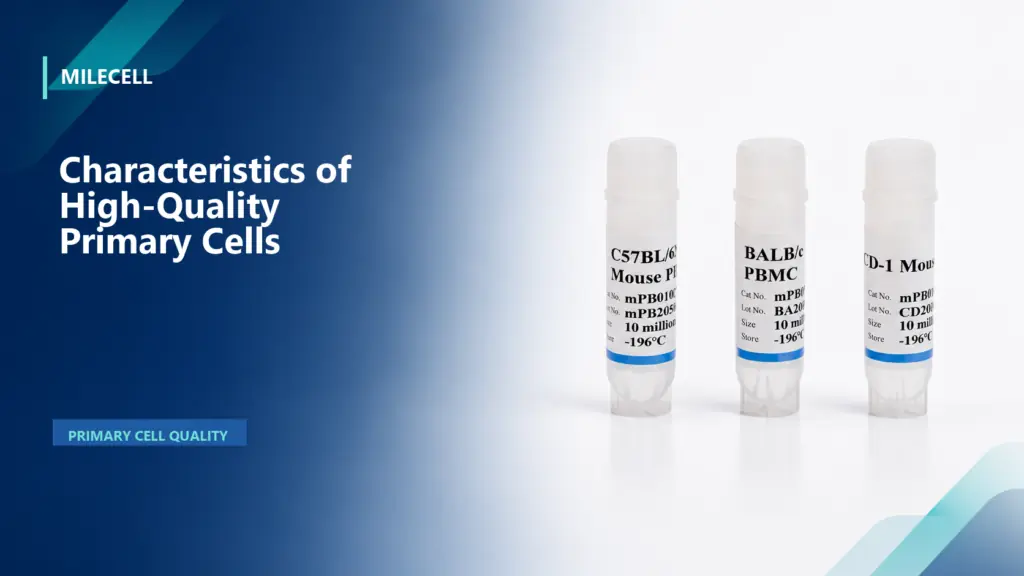
Primary cells are cells isolated directly from tissues or organs and cultured for research purposes. Unlike immortalized cell lines, primary cells maintain many characteristics of their original tissues, making them valuable models for biomedical research, drug discovery, toxicology studies, and cell-based assays. However, the quality of primary cells can directly affect experimental accuracy and reproducibility. […]
Primary cells are widely used in drug discovery, toxicology studies, disease modeling, and other life science applications because they better maintain the characteristics of their original tissues compared with many immortalized cell lines. However, primary cells are also more sensitive to environmental changes and handling procedures. Unlike continuous cell lines, primary cells usually have limited […]
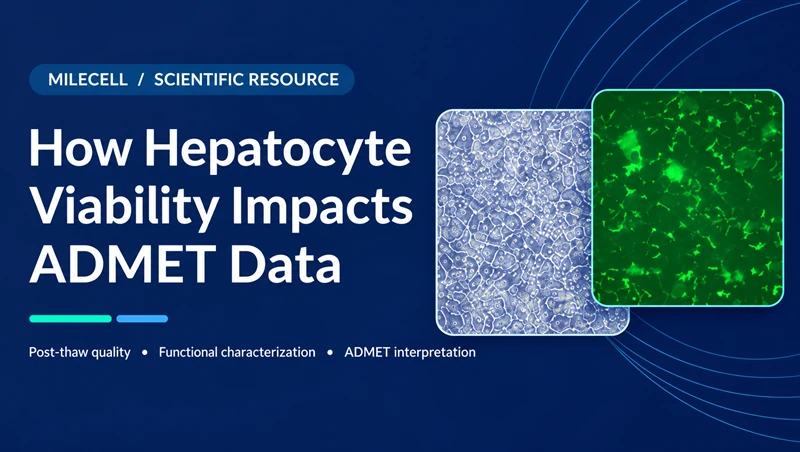
A primary hepatocyte assay can produce a clean-looking dataset while the underlying cell population is struggling to recover. That is why hepatocyte viability is more than a routine post-thaw quality checkpoint: it is part of the context needed to interpret metabolism, uptake, transporter function, and hepatotoxicity readouts in ADMET research. Yet a viable cell is […]
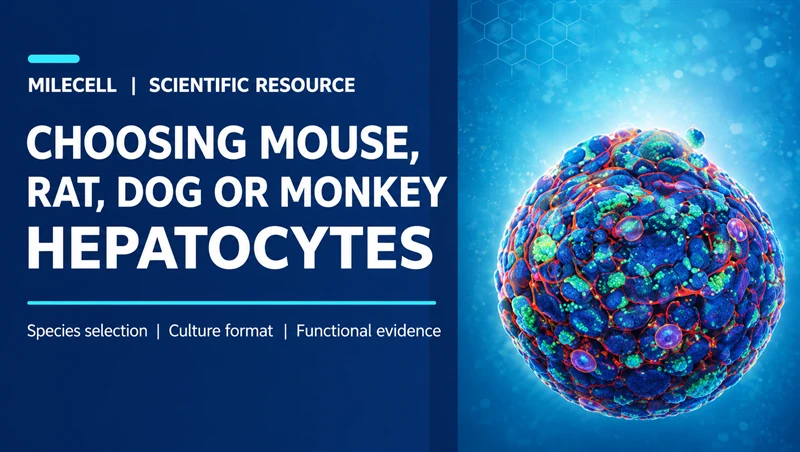
Choosing mouse, rat, dog or monkey hepatocytes is not simply a question of which animal model is “closest” to the intended application. The useful choice depends on the species already relevant to the study, the endpoint being measured, the culture format, and the qualification data available for the exact material being considered. MileCell offers primary […]
The most useful monocyte isolation method is the one that selects the population relevant to the question being asked. A CD14-positive fraction can be appropriate for many human monocyte studies, but surface-marker expression, subset representation, and downstream functional testing should all guide the workflow. MileCell MagSep™ CD14 MicroBeads, Human (Cat. No. AB0004) are designed for […]
Choosing how to isolate human T cells is about more than recovering a CD3-positive fraction. The isolation approach can determine whether target cells are directly labeled and whether subsequent measurements can be interpreted with confidence. For a workflow involving T cell characterization, culture, or functional analysis, matching the selection strategy to the assay is essential. […]
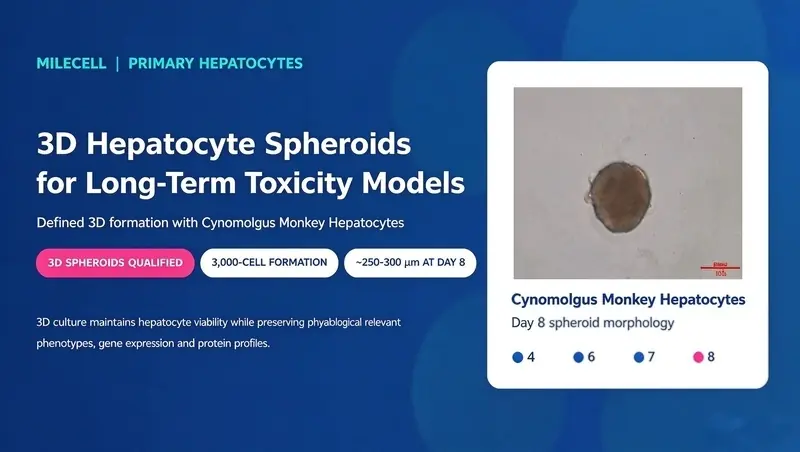
Long-term hepatotoxicity studies ask a different question from short metabolic incubations: can an in vitro liver model remain sufficiently liver-like while exposure and cellular responses evolve over time? For this type of study design, maintaining hepatocyte viability is only part of the challenge. Researchers also need a culture format that preserves a physiologically relevant phenotype […]
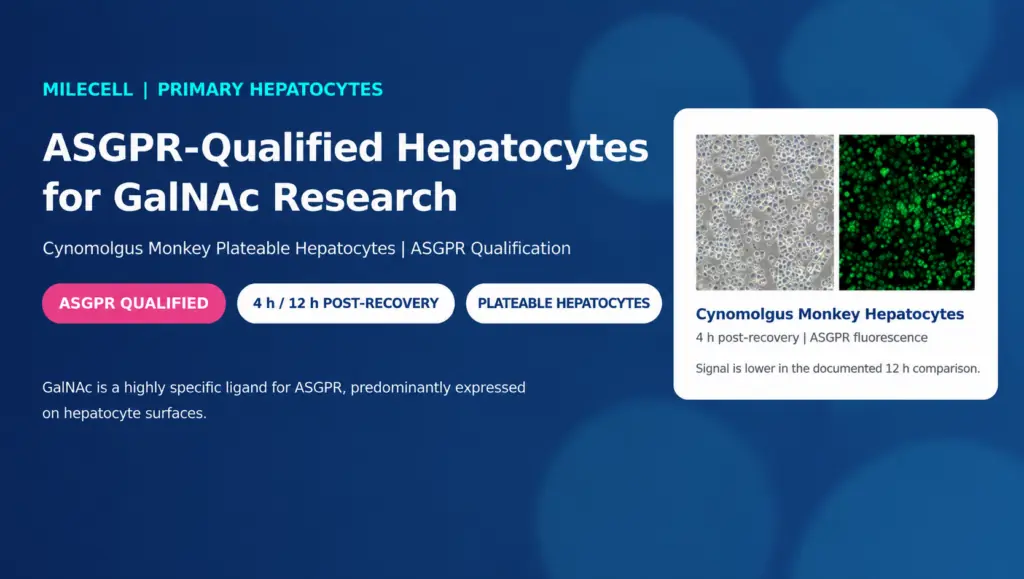
GalNAc-targeted oligonucleotide research depends on a liver-cell model that reflects the receptor context used for hepatocyte-directed delivery. N-acetylgalactosamine (GalNAc) conjugates bind the asialoglycoprotein receptor (ASGPR), and GalNAc is described as a highly specific ligand for ASGPR. The receptor is predominantly expressed on the surface of hepatocytes, making receptor-related characterization directly relevant when an in vitro […]
Login
Sign Up
Welcome back. Please sign in to access your MileCell account.
We use cookies to improve your browsing experience, analyze traffic, and support personalized advertising. You can accept, reject, or customize optional cookies. Privacy Policy
Essential cookies
Always active
Ensure the basic functions of the website (such as login and shopping cart), which cannot be disabled as doing so will render the website unusable.
Preference setting cookie
Remember your personalized choices (such as language, theme), and you will need to manually set them each time after closing.
Statistical analysis of cookies
The technical storage or access that is used exclusively for statistical purposes.Collect anonymous access data for website optimization, which does not involve personal identity information, and its closure does not affect core functions.
Marketing advertising cookie
Used for precise advertisement delivery and tracking browsing behavior. After being disabled, personalized advertisement recommendations will no longer be provided.